
You might notice your child squinting to see the board at school or moving closer to the television. When an eye exam confirms they have myopia, or nearsightedness, it’s natural to wonder if their vision can be returned to normal. You may wonder whether there is a way to turn back the clock on their eyesight.
The short answer is that you cannot reverse myopia, but you can effectively manage its progression to protect your child’s long-term eye health. At Canmore Family Eyecare, modern vision care focuses on slowing the progression of nearsightedness, which can have a big impact on your child’s future.
What Is Myopia or Nearsightedness?
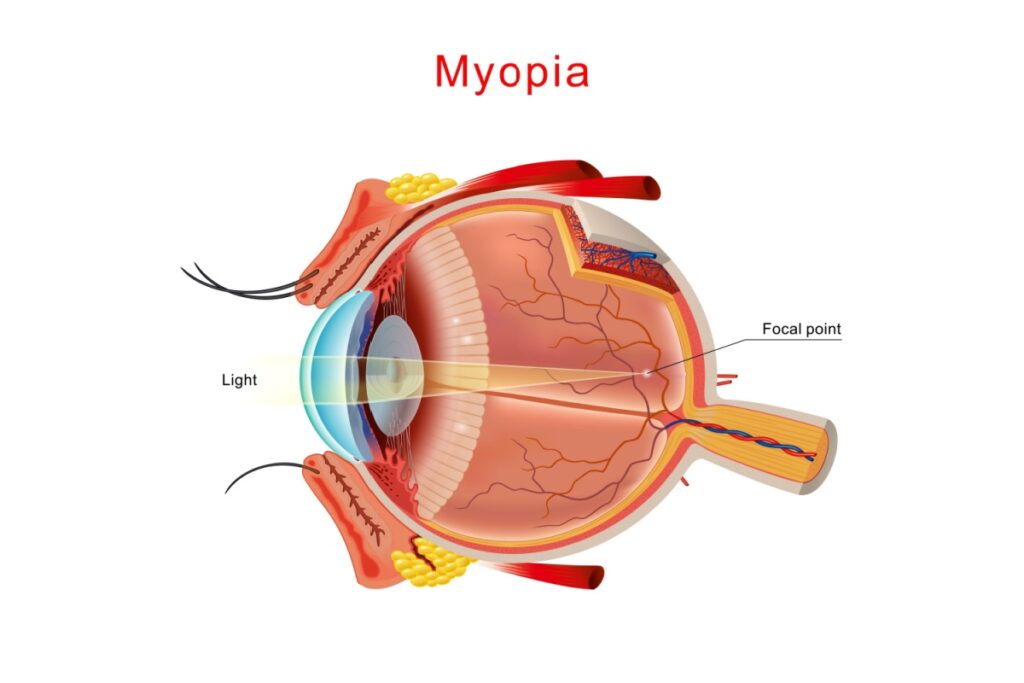
When you have myopia, you can see objects up close with no problem, but things in the distance look blurry or out of focus. This happens when the eye grows a little too long from front to back, or when the cornea has too much curve. Because of this shape, light entering the eye focuses in front of the retina instead of directly on it, blurring your distant vision.
The Honest Answer About Reversal & Cures
Myopia is a structural change in the eye, and once these changes happen, you cannot undo them. There is currently no cure for nearsightedness. Instead of focusing on a cure, modern eye care aims to control its progression.
Think of it less like a “cure” and more like proactive management. By slowing the rate at which your child’s prescription changes, an optometrist can help keep their myopia level lower over time. This approach, often beginning with a comprehensive eye exam, is key to supporting their ocular health for years to come.
Why Early Myopia Management Matters
Myopia often begins in childhood and can progress quickly during the school-age years and into the teens. When a child’s nearsightedness worsens, their prescription gets stronger. Regular pediatric eye exams are an important tool for tracking these changes and starting a management plan early.
Catching and managing myopia progression is about more than just stronger glasses. A higher level of myopia increases the risk for certain eye conditions later in life. An effective myopia control plan helps to reduce these future risks.
Risks of High Myopia
A high degree of myopia is associated with a greater chance of developing serious eye health issues, including:
Modern Myopia Control Options
You have effective, non-surgical options to help manage your child’s myopia. Our Canmore optometrist can discuss different approaches to find a suitable fit for your child’s needs and lifestyle. These treatments help slow the elongation of the eye, which is the main reason myopia progresses.
Specialty Glasses & Contact Lenses
Specialty lenses are a popular family eye care choice for myopia control. These are not standard glasses or contact lenses. They have unique designs that correct blurry distance vision while also slowing the eye’s growth, which helps manage the progression of nearsightedness.
Orthokeratology (Ortho-K)
Orthokeratology, or Ortho-K, involves wearing custom-fitted contact lenses overnight. While your child sleeps, the lenses gently and temporarily reshape the front surface of the eye. Your child then removes the lenses in the morning and can enjoy clear vision all day without needing glasses or daytime contacts.
Lifestyle Habits to Support Healthy Vision
Along with professional myopia control, some daily habits can support your child’s eye health. Encouraging a few simple routines can make a difference for their vision care in the Bow Valley.
You can help protect their eyes by encouraging them to:
- Spend at least two hours playing outside each day.
- Take breaks from screens and other close-up work every 20 minutes.
- Follow the 20-20-20 rule—every 20 minutes, look at something 20 feet away for 20 seconds.
Visit Us for Myopia Control in Canmore
While myopia can’t be reversed, you have powerful tools to manage it. Our team at Canmore Family Eyecare can provide the information and support you need.
Schedule an appointment with our eye doctor in Canmore to discuss a personalized myopia control plan for your child.