
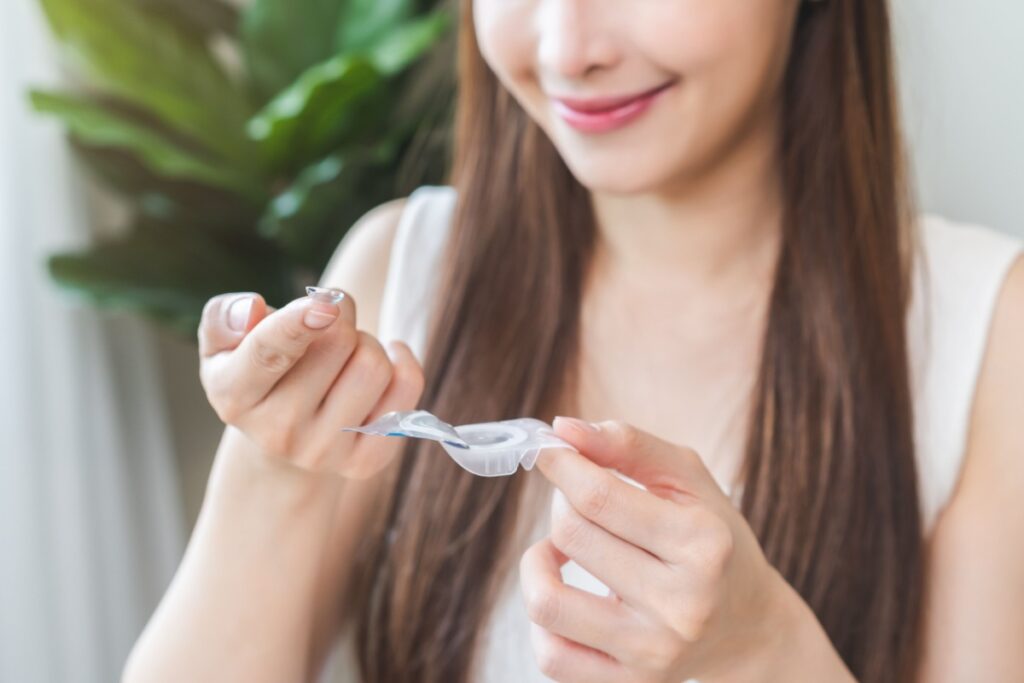
You reach for the backup box of contact lenses sitting in your bathroom drawer and you notice the date printed on the package. Your eyes feel fine, and the lenses look perfectly clear through their sealed packaging, so you wonder if you should trust the expiration date.
At Canmore Family Eyecare, this is a question that we often get from patients during contact lens exams.
Yes, contact lenses do expire, and using them past their expiration date can put your eye health at serious risk. In fact, the expiration date marks when the sterile packaging solution can no longer protect your lenses from harmful bacteria.
Contact Lens Expiration Dates Matter for Your Eye Health
Contact lenses have expiration dates printed on their packaging for important safety reasons. These dates tell you when the sterile solution inside the sealed package may no longer protect your lenses from harmful bacteria and contamination.
Think of the expiration date as your safety net. The saline solution keeps your lenses sterile and maintains their shape and flexibility. When that solution breaks down over time, your lenses become vulnerable to bacteria that can cause painful eye infections.
Where to Find Expiration Dates on Your Contact Lens Packages
You’ll find expiration dates stamped or printed directly on your contact lens packaging. The date appears on both the outer box and individual lens containers, so you can always check before opening each pair.
Look for small print along the edges of your lens packages or on the bottom of the box. Manufacturers place these dates where they won’t interfere with product information. Health Canada guidelines require clear labeling to help you make safe choices.
What the Date Format Looks Like
- Month and year (MM/YYYY)
- Sometimes includes the day (MM/DD/YYYY)
- May show as “EXP” followed by the date
What Happens When You Use Expired Contact Lenses
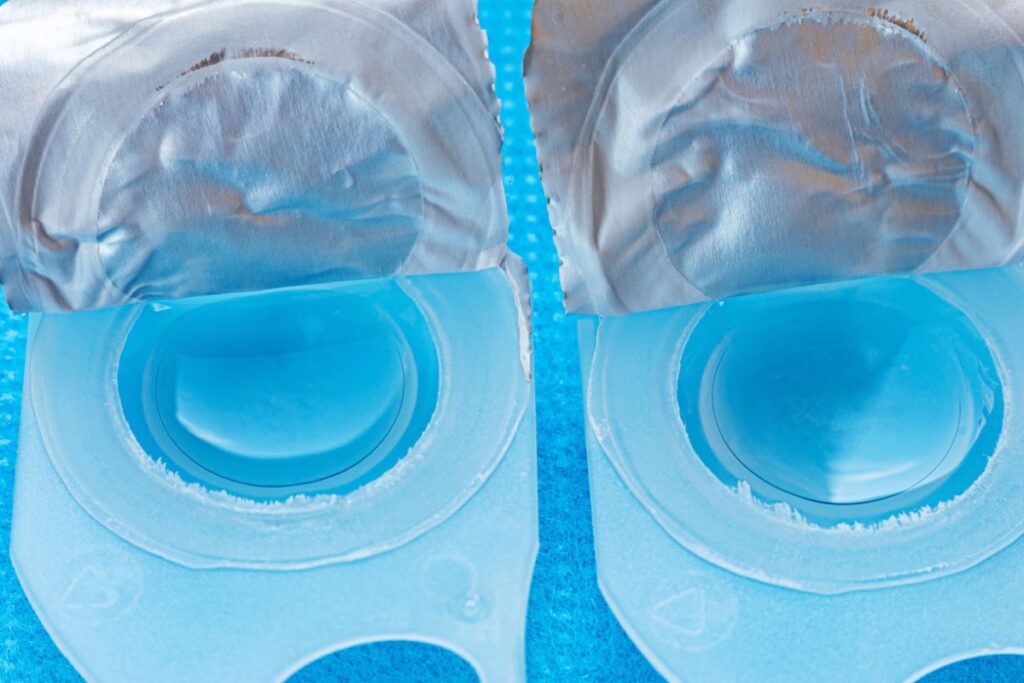
When your contacts expire, the sterile packaging around your lenses begins to break down. Your lenses may be exposed to bacteria or they may even begin to degrade.
Your eyes are delicate, and contaminated lenses can cause damage that takes weeks to heal. Some infections require prescription medications and multiple follow-up visits with your eye doctor. In some cases, this may require emergency eye care.
Health risk of using expired lenses include:
How Long Contact Lenses Stay Fresh
Different types of contact lens have different shelf lives when stored properly in their original, unopened packaging. Your daily lenses and monthly lenses don’t necessarily expire at the same rate.
The material and packaging size affect how long manufacturers can guarantee sterility. Thicker packaging solutions in larger containers typically maintain their protective qualities longer than smaller, single-dose packages. Understanding the differences between lens materials can help you make informed choices about your eye care needs.
Daily Disposable Lenses
When kept sealed, these single-use lenses typically last 3–4 years from the manufacturing date. The individual packaging helps maintain sterility, but contains smaller amounts of preservative solution.
Weekly & Monthly Lenses
Extended wear lenses usually remain safe for 3–5 years in unopened packages. Their larger containers hold more preservative solution, which can maintain sterility for longer periods.
Specialty Lenses
Toric lenses for astigmatism and multifocal lenses often have similar expiration timeframes to regular lenses. However, their complex designs may make them more sensitive to solution breakdown.
Proper Storage Tips to Keep Your Contacts Fresh
How you store your unopened contact lenses affects their safety and effectiveness. Even properly manufactured lenses can become unsafe if you expose them to extreme conditions.
Your bathroom medicine cabinet or bedroom dresser drawer usually provides good storage conditions. These locations stay at consistent room temperature and remain dry throughout the day.
When you’re ready to order new lenses, you can easily order contacts to maintain your supply.
Storage Conditions That Protect Your Lenses
- Keep packages at room temperature
- Avoid extreme heat or freezing temperatures
- Store in a dry location away from direct sunlight
- Don’t leave packages in hot cars or near heating vents
Your vision and comfort depend on having fresh, properly fitted contact lenses. Our team at Canmore Family Eyecare provides comprehensive contact lens fittings and ongoing care to help you maintain healthy eyes while enjoying clear vision. Schedule your contact lens exam today for you and your family in the Bow Valley.