
You’ve probably been to the eye doctor for a vision check, but you might wonder what happens during a thorough examination. Maybe your family doctor suggested you get your eyes checked, or you’ve noticed changes in how clearly you see.
At Canmore Family Eyecare, our team provides thorough evaluations that examine every aspect of your vision and eye health using modern diagnostic technology. Eye exams go far beyond basic vision screening to protect your sight and detect problems early.
A comprehensive eye exam is a complete evaluation of your vision and eye health that goes far beyond reading letters on a chart. It includes multiple tests to detect vision problems, eye diseases, and even signs of other health conditions before you notice any symptoms.
Key Components of Your Eye Exam
Your Health History & Current Concerns
The eye care team starts by asking about your vision symptoms, family history, medications, and daily activities. This conversation helps them understand your specific needs and risk factors. You’ll discuss any concerns like eye strain from computer work or difficulty seeing at night.
Visual Acuity Testing
You’ll read letters on charts placed at different distances to measure how clearly each eye sees. This familiar test determines if you need glasses or contact lenses for sharp vision. The eye doctor tests each eye separately and together to get accurate measurements.
Eye Movement & Coordination
Simple tests check how well your eyes work together and follow moving objects. The doctor might ask you to track a pen or light with your eyes while keeping your head still. These tests reveal problems with eye muscle coordination that can cause double vision or eye strain.
Refraction Assessment
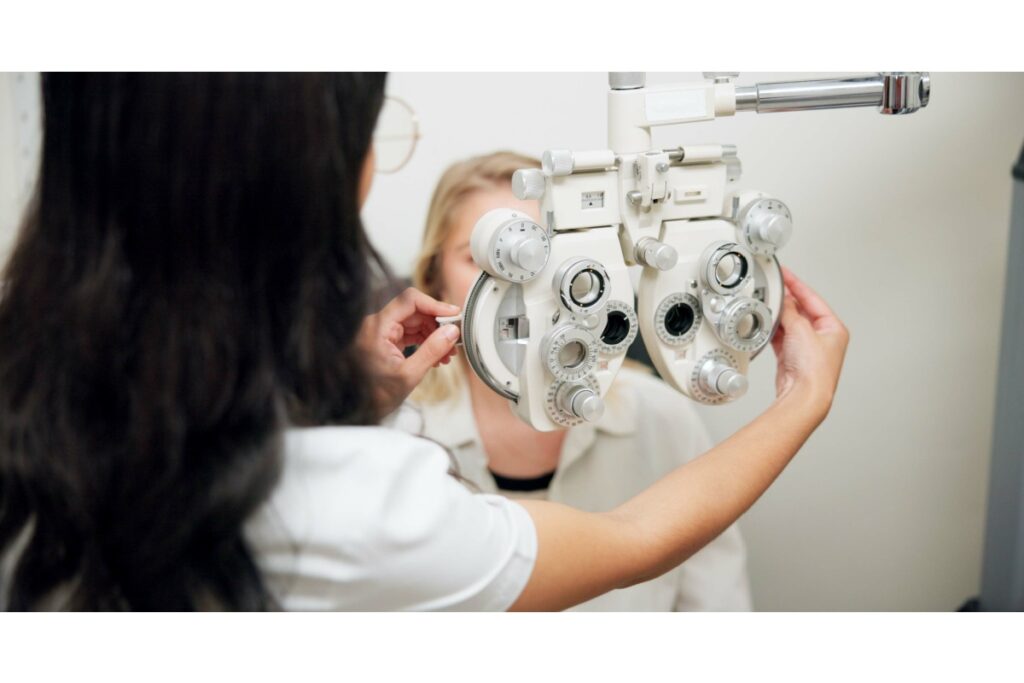
The eye doctor uses special lenses and instruments to find your exact prescription for glasses or contact lenses. You’ll look through different lens combinations while the doctor asks “which looks clearer — option one or option two?” This process fine-tunes your prescription for the sharpest possible vision.
Eye Health Assessment & Technology
Eye Pressure Measurement
The team measures pressure inside your eyes to screen for glaucoma using comfortable, modern instruments. You won’t feel the uncomfortable air puffs that older machines used. High eye pressure can damage your optic nerve over time, so early detection helps protect your vision.
Retinal Photography & Imaging
Digital cameras and scanners take detailed pictures of the inside of your eyes to document your current eye health. These images help the doctor track any changes over time and spot problems early. The Optomap machine captures wide views of your retina without dilating your pupils.
Corneal Evaluation
Special instruments measure the curvature, thickness, and shape of your eye’s clear front surface. This information helps with contact lens fitting and detects irregularities that could affect your vision. The test takes just seconds and feels completely comfortable.
Dry Eye Screening
The doctors or technicians will ask you questions about how your eyes feel during the day and at the end of the day. They can help determine if you have dry eye concerns that may affect your comfort or vision long-term.
Internal Eye Structure Examination
Retina & Optic Nerve Assessment
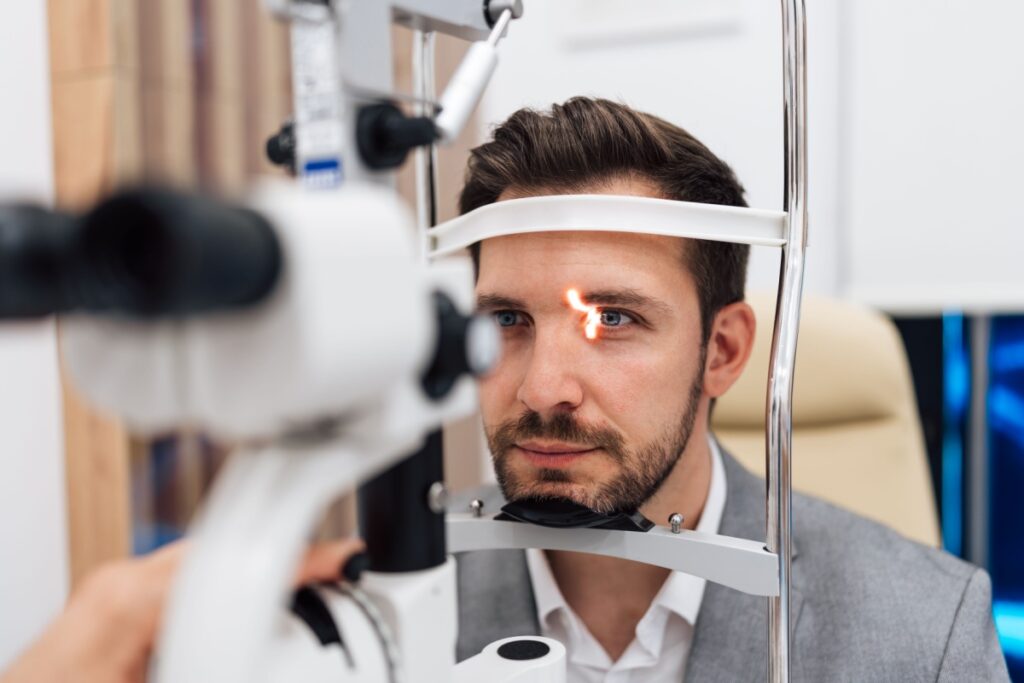
The doctor examines your retina, optic nerve, and blood vessels inside your eyes using bright lights and magnifying lenses. This detailed look reveals signs of eye diseases like macular degeneration or diabetic damage. You might notice brief bright lights during this part of the exam.
Peripheral Vision Check
You’ll focus on a central target while lights flash in your side vision to map what you can see peripherally. This test detects blind spots that might indicate glaucoma or other conditions. Loss of side vision often happens gradually, so you might not notice it on your own.
Beyond Vision Correction
Early Disease Detection
The exam detects serious eye diseases like glaucoma, cataracts, and macular degeneration before you experience symptoms. Early detection means treatment can start sooner to preserve your vision. Many eye conditions cause irreversible damage if left untreated.
Overall Health Screening
Your eyes reveal signs of diabetes, high blood pressure, and other health conditions throughout your body. The blood vessels and nerves in your eyes show changes that indicate systemic diseases. Sometimes an eye exam catches health problems before your family doctor does.
How Often You Need Eye Exams
At Canmore Family Eyecare, we encourage patients of all ages to schedule a comprehensive eye exam each year. Annual visits help track changes in your vision, detect problems early, and protect your long-term eye health.
Children & Teens
Children’s eyes grow and change quickly, so yearly eye exams play an important role in healthy visual development. Regular visits starting around 6–12 months of age allow your optometrist to:
- Monitor your child’s visual development as they grow
- Detect issues like lazy eye, eye turns, or focusing difficulties early
- Identify and manage myopia (nearsightedness) before it progresses
- Support learning, sports performance, and everyday comfort
Adults Under 65
Even when your vision feels stable, subtle changes can occur from year to year. Annual eye exams help your optometrist:
- Keep your glasses or contact lens prescription up to date
- Detect early signs of conditions like glaucoma or retinal changes
- Monitor digital eye strain, dry eye, and other lifestyle-related concerns
- Ensure safe, healthy contact lens wear if you use them
Seniors 65 & Older
Age increases the risk of eye disease, making consistent monitoring especially important. Seeing your optometrist each year helps:
- Detect cataracts, macular degeneration, and glaucoma early
- Track medication-related vision or eye health changes
- Monitor gradual changes that can affect reading, driving, or navigating low-light environments
- Support long-term visual comfort and independence
While most people benefit from a yearly exam, some may need to visit more often based on their health, vision changes, or specific eye conditions. Your optometrist will let you know if more frequent monitoring is recommended for your eyes.
Prioritize Your Long-Term Eye Health
Your eyes deserve comprehensive care that goes beyond basic vision testing. At Canmore Family Eyecare, we combine modern diagnostic technology with personalized attention to monitor every aspect of your eye health. Our thorough approach helps detect changes early, keep your vision sharp, and support your overall well-being.
Scheduling a comprehensive eye exam each year is one of the most effective ways to protect your sight for the future. Whether you’re experiencing vision changes or simply staying proactive, the team is here to help you maintain healthy eyes for years to come.
Book your appointment today and give your eyes the care they deserve.