

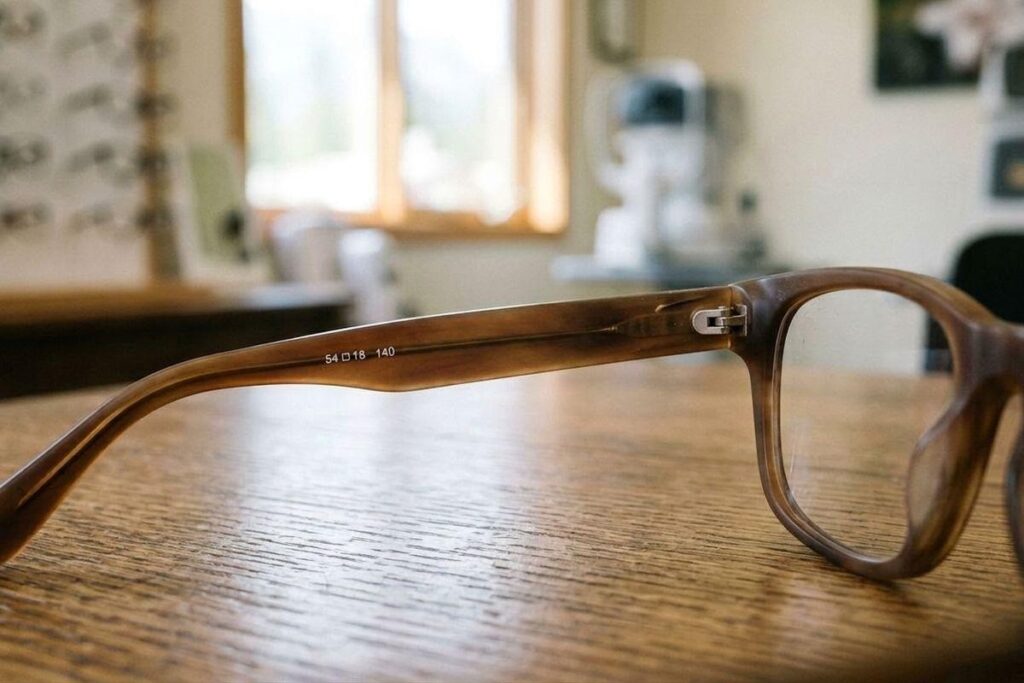
Have you ever looked closely at the inside of your glasses? Pick up your current pair and look along the inside of the arm. You’ll spot 3 small numbers stamped into the material, something like 56-18-145.
Those 3 numbers tell you your frame size in millimetres, with lens width first, bridge width second, and temple length third. So 56-18-145 means each lens is 56mm wide, the bridge is 18mm, and the arm is 145mm long.
Every measurement uses millimetres, never inches. That keeps things consistent when you shop or order a new pair online. If you’d rather skip the guesswork, your optometrist can walk you through the glasses selection in person.
Where to Find These Numbers
Most frames print the numbers on the inside of 1 arm. However, some manufacturers tuck them onto the nose bridge instead. You’ll see them separated by dashes or small spaces.
Grab a ruler and measure them yourself if the print has worn off, which happens to the best of us, especially when you’ve had your frames for a long time.
The 3 Main Frame Measurements
Lens Width
This measures one lens across its widest point. Most adult frames fall between 40mm and 60mm.
A wider lens covers more of your field of view. Protect your peripheral vision and choose a wider lens for outdoor activities or computer work.
Bridge Width
The bridge is the gap that rests on your nose. Most sit between 14mm and 24mm.
A bridge that’s too wide lets your glasses slide down. A bridge that’s too narrow will pinch your nose by mid-afternoon. You want to find the nice middle ground so you can wear your glasses comfortably all day.
Temple Length
This is the arm length, measured from the hinge to the tip that curves behind your ear. Common sizes run 135, 140, 145, and 150mm.
The right length keeps your frames steady when you look down or pull a toque over your ears.
How to Measure Your Glasses at Home
The nice part is that you can double-check these measurements if you’d like, or clarify your size if the numbers have worn off. You only need a ruler that shows millimetres and a flat surface. Lay your glasses down and work through these steps:
- Grab a ruler marked in millimetres.
- Measure one lens straight across at its widest point.
- Measure the gap between the two lenses for your bridge width.
- Measure the arms from the hinge to the tip. If your glasses’ arms curve, measure the straight part of the arm up to where it starts to bend, then measure the remaining portion and add these 2 numbers together.
Write the numbers down so you can compare them against any pair you’re thinking about. You can also keep them handy when you browse frames from different brands.
Extra Measurements Worth Knowing
- Frame width: Measure the full distance across the front from one outer edge to the other.
- Lens height: Measured from the top to the bottom of the lens, which matters for progressive lenses that need room for each zone.
Sizing Glasses for Your Face Shape
Check Your Nose Bridge
Look at how wide your nose sits where glasses rest. A narrow nose pairs with a smaller bridge number, while a wider one needs more room.
Next, check where your nose bridge sits compared to your pupils. You have a high bridge if it sits level with or above your eyes. In this case, pick frames with a keyhole design. This cutaway shape distributes the weight along the sides of your nose so the frame doesn’t sit directly on top.
A low bridge sits below your pupils. Choose frames with adjustable nose pads if you have this feature, as the pads lift the glasses up off your cheeks and stop them from sliding down all day.
Match Width to Your Face
Frames come in narrow, medium, and wide widths. The arms should follow a straight line back to your ears without bowing out.
Aim for a small, even gap between the arm and your temple. Make sure there’s no pressure on the sides and no sliding when you move.
Tips for the Right Frame Fit
A few habits make shopping smoother and help you land on a pair that feels comfortable from the first day:
- Start with a pair you already wear and love, then match its numbers.
- Acetate frames have a fixed bridge, so match that measurement closely.
- Metal frames with nose pads adjust, so they forgive a bit more wiggle room.
Stop Guessing and Start Trying on Frames
Numbers get you close, but a hands-on fitting seals the deal. Your optician can adjust the temple curve, nose pads, and balance in minutes. Update your prescription with an eye exam from your optometrist to round out the fitting process.
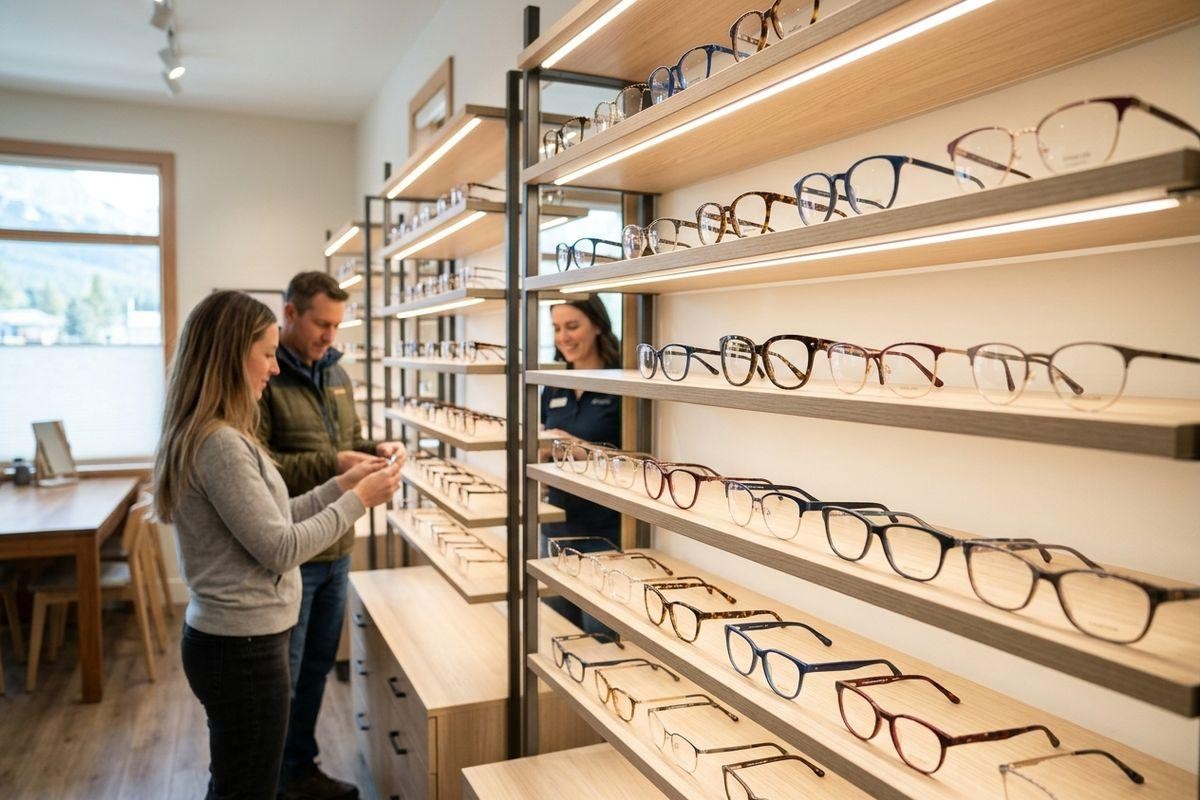
At Canmore Family Eyecare, our team is passionate about helping you find glasses that fit your face and your lifestyle. Visit us for a fitting today at Canmore Family Eyecare and try on frames with help from an optician who knows the details.