

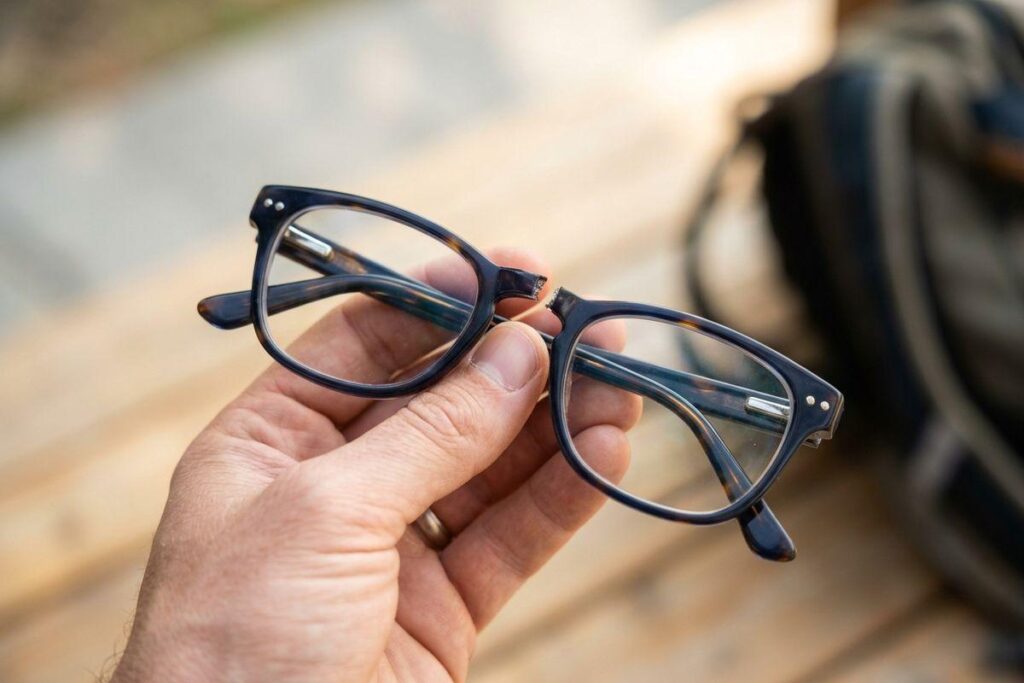
Glasses take a beating. They ride on your face all day and get tossed into bags between wears, so a loose hinge or a snapped arm isn’t surprising. Some of that damage you can handle at the kitchen table with a small screwdriver. Other breaks need the tools our optometry team keeps at the clinic.
To fix broken glasses frames, find the damaged part, judge how bad the break is, then decide whether a repair at home or a professional fix makes more sense.
Hold the frame under a bright light before you start. Check whether the lens still sits tight in its groove and whether any piece has separated completely. A frame that’s been twisted out of alignment can leave your lenses sitting off-centre, which is worth mentioning at your next eye exam.
Simple Fixes You Can Try at Home
Some repairs take only a few minutes and a steady hand. Keep a small glasses repair kit in a drawer so you have the parts ready when you need them.
Loose Screws and Hinges
The tiny screw holding each temple arm to the front works itself loose over months of opening and closing. When the arm swings freely with no resistance, a quarter turn is often all it needs. Pick up a repair kit and keep it in a drawer. Most run under $15 and come with spare screws, a screwdriver, and a set of pads.
Work over a towel so a dropped screw doesn’t vanish into the carpet:
- Use the smallest screwdriver head that fits the slot, since a loose fit can chew up the metal.
- Turn slowly and stop as soon as the arm holds its position.
- Leave the glue in the cupboard, because it can seize the hinge and make future adjustments impossible.
Nose Pads
Nose pads flatten and yellow with age, and once they lose their grip, your glasses start creeping down your nose. Red dents on either side are usually the first sign.
Spare pads come with most kits. Pop the old ones out, then snap or screw the new ones into place. If the frame still slides after a fresh set, the pad arms may need a gentle squeeze inward.
Bent Frames
When one lens sits noticeably higher than the other, the frame has usually been twisted rather than broken. How you correct that depends on what you’re holding:
- Metal frames respond to light pressure between your fingers, so move in small increments and try them on as you go.
- Plastic frames need warmth first, and a few seconds over steam can soften them enough to adjust safely.
- Titanium and memory metal tend to spring back where you don’t want them to, so bring those to us instead.
Repairs Best Left to a Professional
Some damage goes past what a home kit can handle. Pushing a repair too far can turn a fixable frame into one you can’t wear at all.
Broken or Snapped Frames
A frame that breaks clean through tempts almost everyone to reach for superglue. That bond rarely holds along something so thin, and the dried bead can press into your skin or throw the fit off across your whole face.
Glued joints often fail again within days. Bring the pieces in, and we can tell you whether the frame can be soldered, or whether your lenses would sit better in a new front from our range of frames for every age and style.
Scratched or Cracked Lenses
Toothpaste and car polish are often talked about online as scratch removers. Both can grind into the anti-reflective coating and leave the surface hazier than the original scratch.
A crack is a separate problem. The lens can work loose from its groove, and looking through a fracture makes your eyes work harder than they should. Replacing it is the practical route.
Can You Reuse Old Lenses in New Frames?
Lenses are cut to the exact shape of the frame they came from, so a swap only works when the new frame matches closely. If it’s the same model in a fresh colour, your old pair may drop right in.
A different shape usually means recutting or replacing the lenses, since the optical centres have to line up with your pupils. When they sit even slightly off, you might notice:
- Headaches after 20 minutes of reading
- Tired, achy eyes by the end of the day
- Blurriness that clears when you glance over the top of the frame
- A pulling sensation when you move your eyes side to side
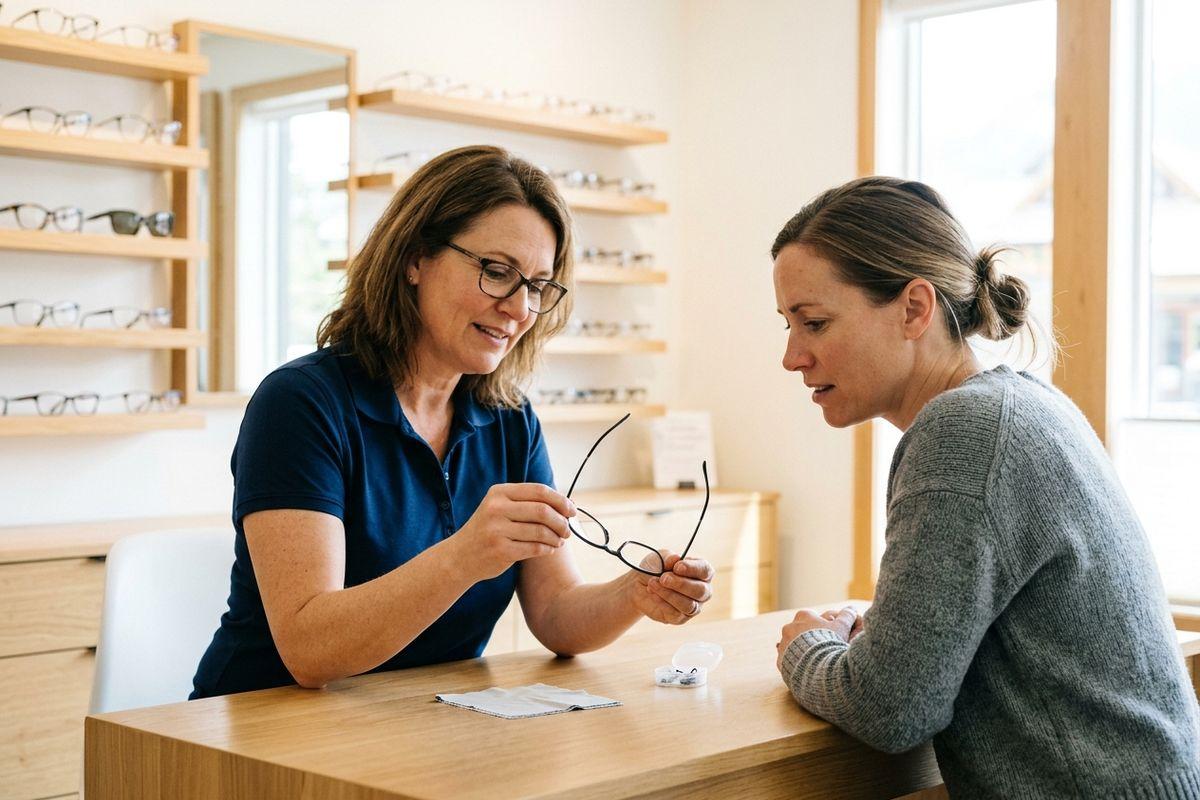
Bring in the old glasses along with the frame you’re eyeing, and we can measure both to tell you whether the swap is realistic.
How to Keep Your Glasses From Breaking
Most damage happens during ordinary moments rather than dramatic falls. A pair left on a couch cushion takes far more abuse than one that spends its downtime in a case, so a few habits can add months to the life of a frame:
- Use a hard case any time your glasses leave your face.
- Take them off with both hands so the arms stay even.
- Check your seat before you sit down.
- Rinse them under lukewarm water before you wipe, since dust dragged across a lens can scratch the coating.
- Keep them off the car dashboard, because heat can warp plastic and loosen the mounts on rimless styles.
If you spend your weekends on the trails, sunglasses with full UV protection can spare your everyday frames some wear.
Bring Your Broken Glasses In
Some repairs take 2 minutes and a steady hand. Others need proper pliers and a bit of patience, and there’s no harm in handing over a frame you’re unsure about.
At Canmore Family Eyecare, we adjust, repair, and replace glasses, and we can help you find something new when a repair isn’t worth the trouble. Book an appointment, and we’ll have a look at what you’ve got.