Kids don’t usually complain about blurry vision. They squint, they adjust, and they carry on, because a blurry world just feels normal when it’s the only one they’ve ever known. That quiet adapting is exactly why routine children’s eye exams matter so much.
So how often should your child actually sit in the exam chair? Most kids need their first visit between 6 and 12 months old, another around age 3, one before Grade 1, and then a checkup every year until they turn 18.
Stick to that schedule with a family optometrist, and you give your child’s eyes the best shot at staying on track through school, sports, and everything in between.
Why Regular Eye Exams Matter for Kids
So much of what your child learns comes in through their eyes. Reading the board, sounding out words, and spotting a ball coming their way all depend on vision that’s sharp and comfortable.
Kids rarely know when their vision looks different from anyone else’s. A blurry whiteboard or a fuzzy page just feels like the way things are, so they don’t think to mention it.
That’s where routine exams help. An optometrist can spot vision changes well before they turn into bigger struggles with reading, focus, or confidence in the classroom.
Eye Exam Schedule by Age
Knowing when to book keeps you a step ahead of your child’s changing eyes. Here’s what that looks like at each stage.
Baby to Preschool Years
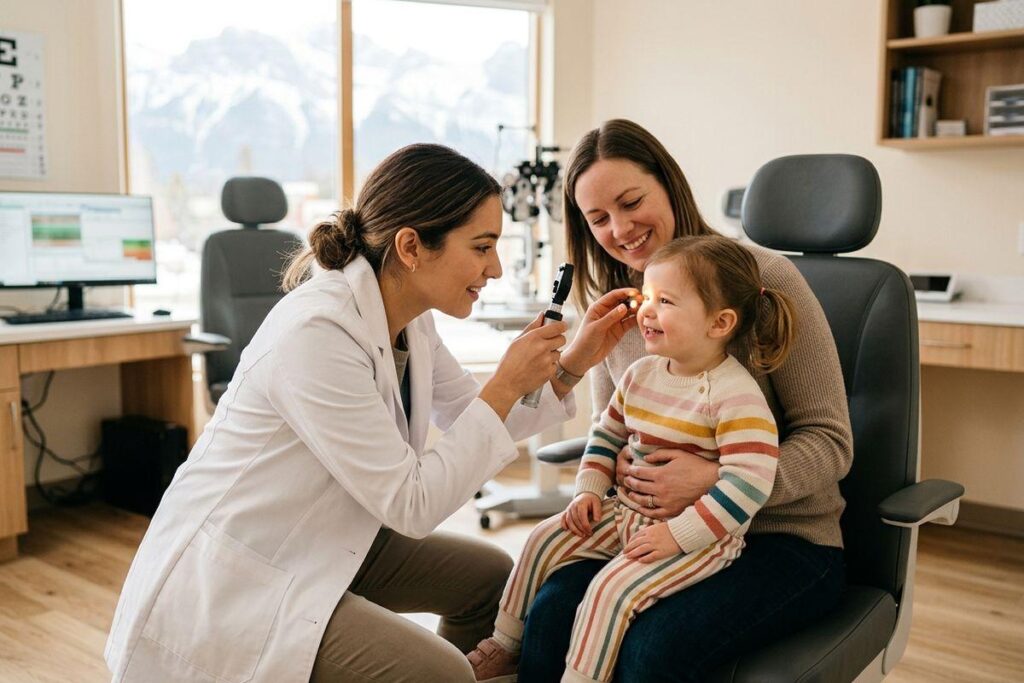
A lot happens with your baby’s eyes in that first year. Their first exam, somewhere between 6 and 12 months old, checks that both eyes focus and work together properly.
The second visit, around age 3, builds on that. This is when the optometrist checks how well your toddler’s eyes track objects and stay aligned with each other.
School-Age Years
Book an exam before your child starts Grade 1. Clear vision makes a real difference once reading, writing, and copying from the board become part of daily life.
From there, a checkup every year through age 18 keeps pace with how quickly kids’ eyes grow and change.
When More Frequent Visits Help
Some kids need to see the optometrist more often than the standard schedule suggests. If eye conditions run in your family, earlier and more frequent visits can help track similar patterns before they become a problem.
The same goes for kids who already wear glasses or contacts. Their prescription can change as they grow, so regular follow-ups keep their correction accurate.
Signs Your Child May Need an Eye Exam
Between visits, keep an eye on your child’s habits. A few signs might mean it’s worth booking a checkup sooner:
- Squinting to see things clearly
- Rubbing their eyes often
- Tilting their head to focus on something
- Holding books or tablets very close to their face
- Complaining of headaches or tired eyes after school
One sign on its own doesn’t always point to a problem. But if you notice a pattern, booking pediatric eye exams can give you some answers.
What Happens During a Pediatric Eye Exam
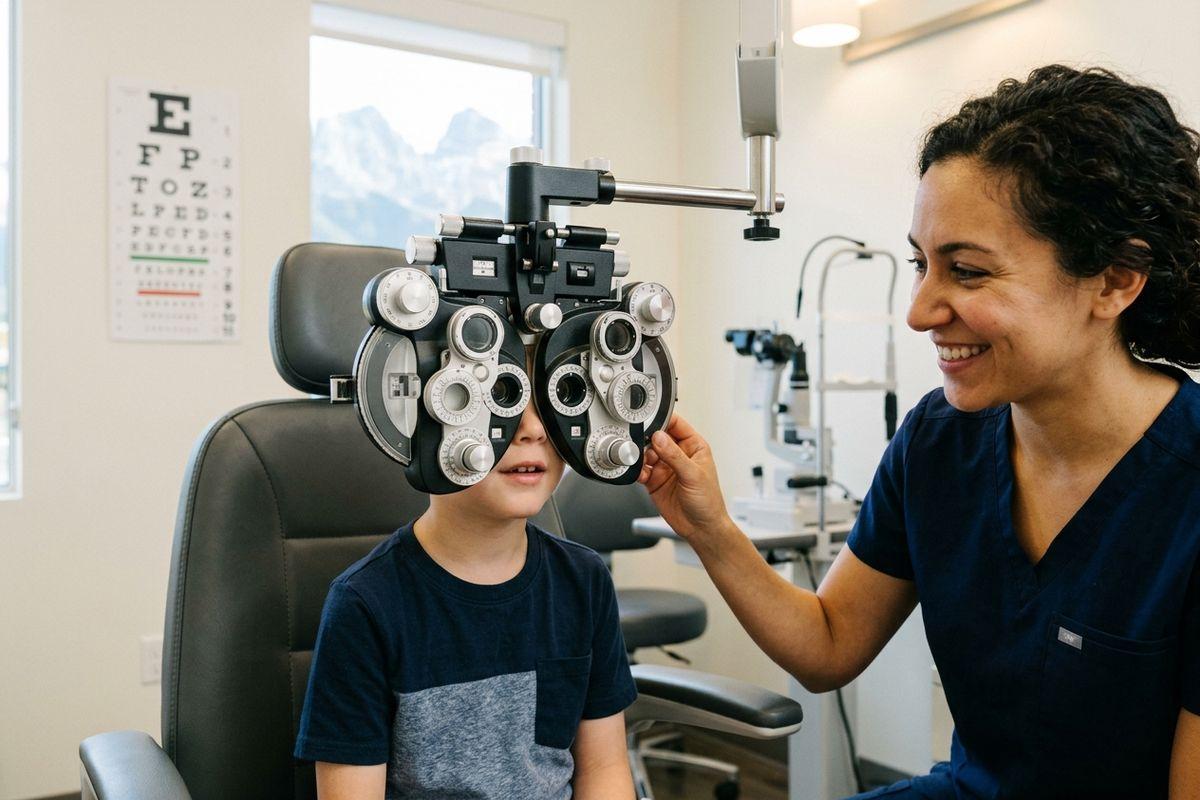
A children’s eye exam covers a lot more than reading letters off a chart. Your optometrist checks overall eye health, watches how the eye muscles move, and makes sure both eyes work as a team.
Your child’s vision gets tested for clarity, distance, and colour. The exam also screens for myopia, lazy eye, and crossed eyes, conditions that respond well to early attention. From there, myopia control options can help slow how quickly nearsightedness progresses as your child grows.
Exams for Kids Who Can’t Read Yet
Little ones don’t need to know their letters for a thorough exam. The optometrist uses pictures, lights, and shapes to measure vision without a single word.
Sharing your family and medical history rounds out the picture too. It helps the optometrist understand your child’s needs from the very first visit.
How to Support Your Child’s Eye Health at Home
Good habits between visits make a real difference. A few small changes to your daily routine can help protect your child’s eyes over time.
Limit screen time where you can, and encourage outdoor play instead. Time outside gives young eyes a break from close-up focus and supports healthy development.
Sun protection matters too. Glare is strong year-round, so UV-protective sunglasses help shield your child’s eyes on the trails, the ski hill, or just the playground.
Keep an eye out for the signs above, and mention anything new at your child’s next visit.
Ready to Book Your Child’s Next Eye Exam?
At Canmore Family Eyecare, your child’s comfort and vision come first. Whether it’s a first exam, a routine checkup, or myopia control, the team offers family eye care in a relaxed, welcoming space.
For a limited time, we’re offering free comprehensive eye exams for children and teens ages 0–18, valid until September 30, 2026. Book your child’s next eye exam today, and give them a clear view of the world around them.