

Key Takeaways
- Cold winds, indoor heating, and low humidity pull moisture from your eyes during winter.
- Scratchy, gritty, red, or watery eyes can all point to dry eye.
- Simple habits like blinking, warm compresses, and humidifiers help reduce discomfort.
- Omega-3 foods and water support healthy tears.
- A Canmore optometrist can look for the root cause of your discomfort and offer treatments like IPL and ZEST.
What Makes Winter Hard on Your Eyes
You step outside on a frosty Bow Valley morning, and soon your eyes feel scratchy and raw. You’re not alone! Winter conditions team up against tears, often leaving people feeling uncomfortable. At Canmore Family Eyecare, we’re here to help you find the cause of your discomfort.
Your eyes dry out in winter because cold winds strip moisture from the surface of your eyes, indoor heating pulls water from the air, and low humidity speeds up how fast your tears evaporate. Add the dry mountain air around Canmore, and the discomfort can feel constant.
If your symptoms are persistent, dry eye treatment can target the source of the problem.
What Causes Dry Eyes in Winter
A few things work against your tears in the colder months. First, cold winds blow across the surface of your eye and carry moisture away. Second, furnaces and space heaters warm your home but leave the air drier as a result. This low humidity causes your tears to evaporate too quickly.
Why Dry Eyes Peak in Cold Months
The dry air in the Bow Valley can often make dry eye worse. When there’s less moisture outdoors to begin with, your eyes work harder to stay comfortable.
Screen time adds another layer to the problem. When you focus on a phone or laptop, you blink less often. Fewer blinks mean fewer chances to spread fresh tears across your eyes. The 20-20-20 rule gives your eyes a chance to relax during long screen sessions: every 20 minutes, look at something 20 feet away for 20 seconds.
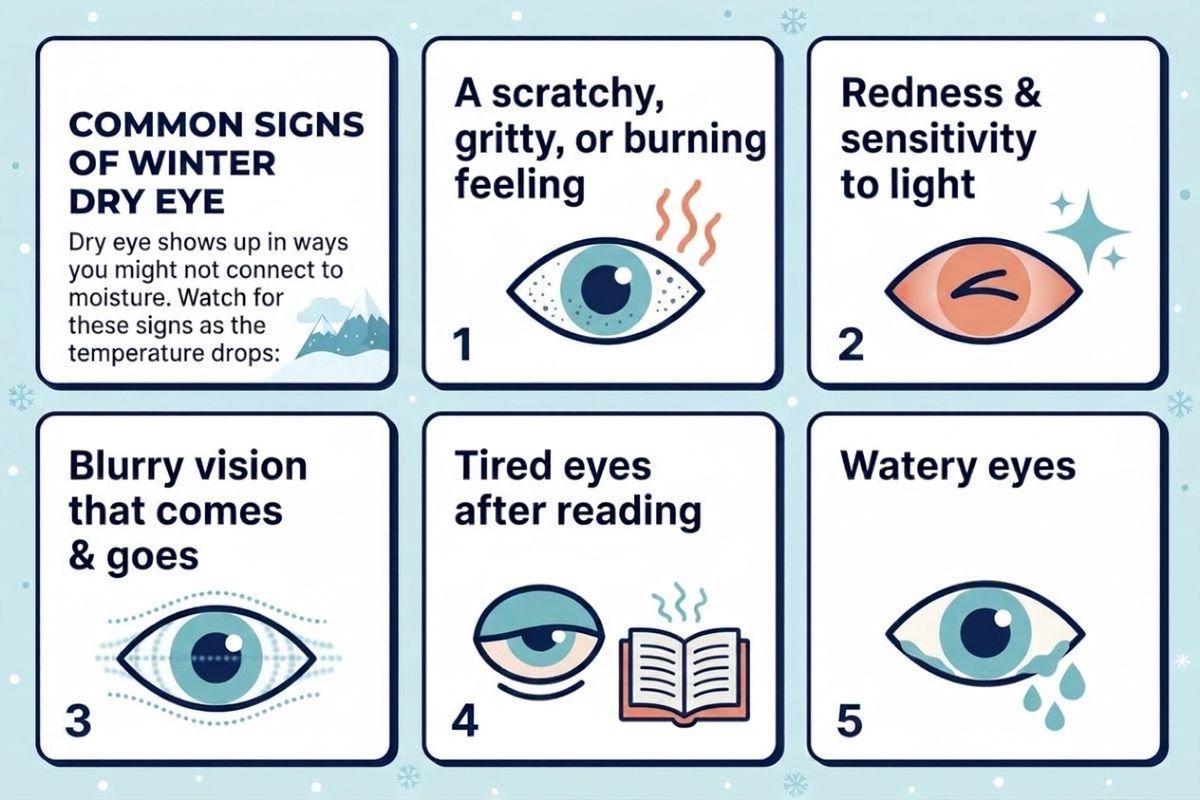
Common Signs of Winter Dry Eye
Dry eye shows up in ways you might not connect right away to moisture. Watch for these signs as the temperature drops:
- A scratchy, gritty, or burning feeling
- Redness and sensitivity to light
- Blurry vision that comes and goes
- Tired eyes after reading
- Watery Eyes
When Watery Eyes Mean Dryness
When your eyes feel irritated, they sometimes produce a flood of reflex tears. However, these tears aren’t great at preserving moisture, so they usually drain away too quickly and don’t fix the underlying issue.
How to Stop Dry Eyes During Winter
In many cases, good habits can help ease or prevent symptoms:
- Blink often and take short breaks from screens, looking away every 20 minutes.
- Run a humidifier at home to add moisture back into dry indoor air.
- Drink water throughout the day so your body has what it needs to make tears.
Simple Daily Habits That Help
A few nightly routines can keep your eyes feeling calmer. Applying a warm compress in the evening can loosen the oils in your glands, allowing your eyes to make better quality tears.
If you’re looking for a convenient at-home option, speak to our team about the latest Umay Thermal Masks, which provide both warming and cooling therapy in one rechargeable mask. A warm session can help soothe tired, dry eyes and support healthy oil flow, while the cooling setting can refresh puffy or irritated eyes after a long day. Because they’re rechargeable, there’s no need for a microwave or ice packs.
Outdoors, wraparound sunglasses block wind from hitting your eyes directly. That alone can cut down a lot of the sting on a windy trail or ski day.
Diet, Vitamins, & Dry Eye Relief
What you eat plays a part in how your eyes feel. In fact, the right foods support the oil and water balance of your tears.
- Omega-3 foods like salmon, sardines, and walnuts help keep tear oils flowing.
- Vitamin A from carrots and broccoli supports a healthy eye surface.
- Limit caffeine, since too much can leave you dehydrated and worsen dryness.
Dry Eye Treatment Options in Canmore
When home care isn’t enough, our team at Canmore Family Eyecare can suggest treatments that target the root cause of your discomfort. Options range from simple drops to in-clinic dry eye therapies, and may include:
- Artificial tears and medicated drops to add moisture and calm irritation
- IPL therapy and radiofrequency to support the glands that make tear oil
- ZEST eyelid cleaning to clear clogged glands along your lash line
When to See a Canmore Optometrist
If your symptoms persist after home care, it’s often wise to book an eye exam. Our team at Canmore Family Eyecare can assess your tear film, identify the cause of your discomfort, and suggest a plan that fits your situation.
If dry, gritty eyes are wearing you down this winter, book an eye exam with our team today.